BRRRR 70 Percent Rule Explained

Two professional male real estate investors seated inside the polished leather interior of a luxury car, parked along the curb of a suburban street. In the background, a residential house is visible with a clear "For Sale By Owner" sign on the lawn. The investors are focused on a digital tablet displaying spreadsheets and financial calculations for a BRRRR strategy, including figures for the 70 percent rule, ARV, and repair estimates. The scene emphasizes a focused, analytical atmosphere within the sophisticated cabin of the vehicle, with natural daylight illuminating the documents and the house outside.

The 70 percent rule is a quick way to estimate the maximum price you might pay for a distressed property. It starts with the property’s expected after-repair value, multiplies that amount by 70 percent, and then subtracts the estimated rehabilitation cost. The result is a preliminary maximum allowable offer. The rule is widely associated with…

Read More

How to Estimate ARV for a BRRRR Property

After-repair value, commonly called ARV, is one of the most important assumptions in a BRRRR deal. It influences how much you can pay for the property, how much rehabilitation spending the project can support, how much equity you may create, and how much permanent financing may be available after the work is complete. A strong…

Read More

BRRRR vs. Buy and Hold Real Estate

Two professional female real estate investors sit at a polished wooden table in a bright, modern office, deeply focused on a strategic comparison. One woman leans over a stack of printed financial reports and colorful bar charts that detail property costs and cash flow projections. Beside her, the second woman checks real-time data on her smartphone as they discuss financing options and equity growth. A whiteboard in the background displays handwritten notes comparing the BRRRR method and traditional buy-and-hold strategies, focusing on risk and long-term returns. The workspace is organized with a laptop, spreadsheets, and pens, all illuminated by steady natural light from a large window.

BRRRR and buy-and-hold real estate are often presented as competing investment strategies. That comparison is useful, but it is not completely accurate. BRRRR is a form of buy-and-hold investing. With both approaches, you acquire a property, operate it as a rental, collect income, pay expenses, and hold the asset for a longer-term return. The primary…

Read More

Does the BRRRR Method Still Work?

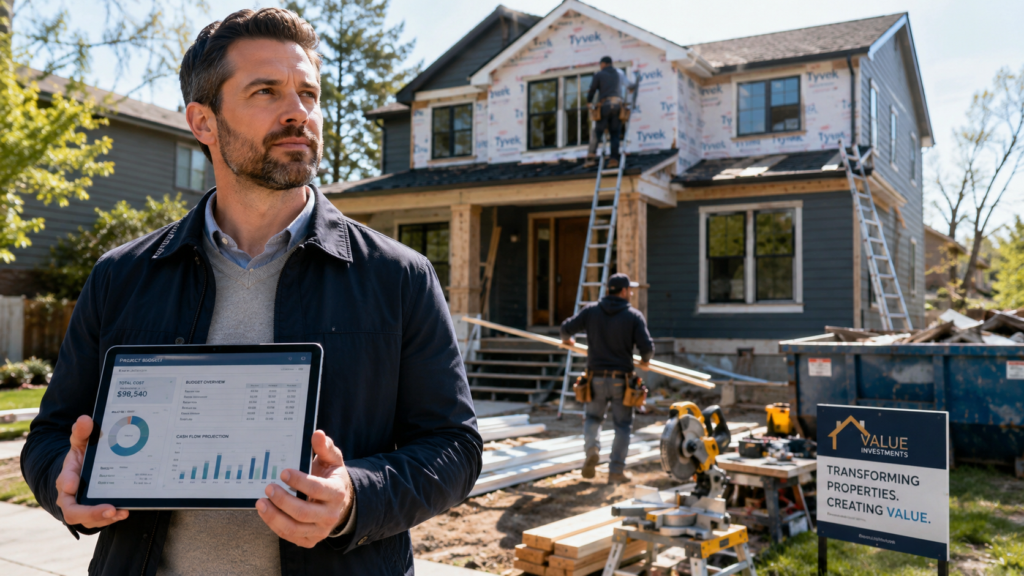
A focused real estate investor in smart casual attire stands in the foreground, holding a digital tablet displaying financial spreadsheets and investment data. Behind him, a residential house is undergoing an active transformation, with contractors in work gear visible on ladders and carrying building materials. The scene captures the middle of a renovation project, featuring visible exterior improvements, organized construction tools, and a clear sense of professional property rehabilitation under natural daylight.

Yes, the BRRRR method can still work—but it doesn’t work automatically. The strategy remains viable when you purchase at the right price, complete renovations that create measurable value, secure sufficient rent, qualify for permanent financing, and maintain enough liquidity to withstand delays or unfavorable changes. What has changed is the margin for error. You may…

Read More

BRRRR Method Example With Real Numbers

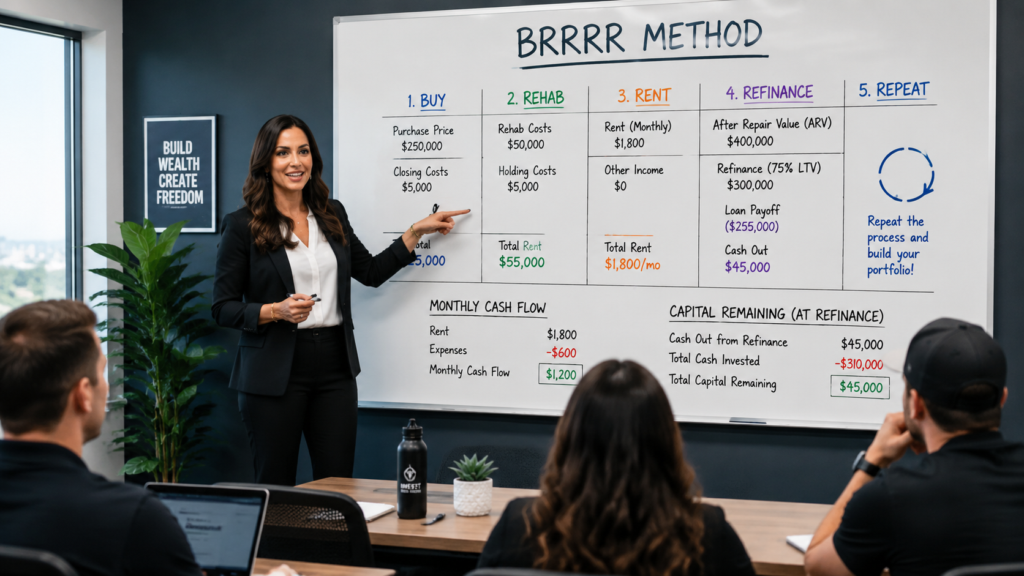
A female real estate investor in professional business attire stands at the front of a modern conference room, gesturing toward a large whiteboard. On the board, a detailed breakdown of the BRRRR method is clearly visible, showing organized columns for purchase price, rehab costs, rent amounts, and refinance figures, along with specific calculations for monthly cash flow and capital remaining. The room is filled with bright, even office lighting, highlighting her confident posture as she teaches her students.

The BRRRR method can sound straightforward when it is reduced to five steps: buy, rehab, rent, refinance, and repeat. The financial outcome becomes less straightforward once you include closing costs, loan fees, holding expenses, operating reserves, refinance costs, and the possibility of a lower appraisal. This hypothetical BRRRR example follows one single-family rental from acquisition…

Read More