Bonus Depreciation for Rental Property Investors: What Qualifies?

100% bonus depreciation is available again, but that does not turn a BRRRR rehab into a 100% first-year write-off.
Bonus depreciation for rental property investors applies to qualifying shorter-life assets, not the residential rental building itself. Appliances, certain flooring, fencing, landscaping, and other eligible property can therefore receive very different treatment from roofs, structural work, plumbing, and other building components.
That distinction matters after a major BRRRR renovation because tens of thousands of dollars may sit across several different depreciation categories.
Knowing what qualifies—and what doesn’t—helps you identify legitimate accelerated deductions without assuming the entire rehab can be written off immediately.
Why Bonus Depreciation Matters Again
Federal law changed the bonus depreciation rules significantly in 2025.
Qualifying property acquired after January 19, 2025 can generally receive a 100% additional first-year depreciation deduction under current law. The IRS explains the restored 100% deduction and its eligibility rules in its additional first-year depreciation guidance.
For rental investors, however, the percentage isn’t the difficult part.
The harder question is determining which parts of your property qualify.
Eligible tangible property generally needs a MACRS recovery period of 20 years or less. A residential rental building normally uses a 27.5-year recovery period, which puts the building itself outside that category.
So if you purchase a $300,000 rental, subtract the land value, and assume the entire remaining basis qualifies for 100% bonus depreciation, you’ve skipped an essential step.
You first have to identify the qualifying property.
What Can Qualify After a BRRRR Rehab?
A BRRRR renovation can include dozens of different components.
You might replace the roof, install new appliances, renovate the kitchen, upgrade electrical systems, add fencing, replace flooring, improve landscaping, rebuild a driveway, or install a new HVAC system.
Those costs don’t automatically follow the same depreciation schedule.
Assets that may fall into shorter recovery periods can include:
- Appliances
- Certain carpeting and flooring
- Furniture
- Some removable fixtures
- Certain dedicated electrical components
- Fencing
- Landscaping
- Parking areas or paving
- Other qualifying land improvements
Whether a specific component qualifies depends on what it is and how it functions within the property.
Structural building components generally stay with the residential rental building. A new roof, for example, doesn’t become five-year property simply because you installed it during the renovation.
This is the core concept behind bonus depreciation for rental property investors: you’re identifying individual qualifying assets rather than writing off the entire rental house.
Your Rehab Budget Doesn’t Tell You What Qualifies
Suppose you buy a distressed duplex and spend $100,000 renovating it.
Your project spreadsheet may show:
Total rehab: $100,000
That’s useful for controlling construction costs. It isn’t detailed enough to determine depreciation treatment.
Imagine that the project includes $8,000 of appliances, $12,000 of flooring and qualifying interior components, $7,000 of fencing and site improvements, and $73,000 of structural and building work.
Those categories can follow different depreciation paths.
The $100,000 total hasn’t changed. What changes is how the underlying costs get classified.
This is why detailed contractor invoices matter long after the rehab ends. A bill that says “complete renovation — $62,000” gives you very little information when you’re later trying to determine what qualifies for accelerated depreciation.
Invoices that break out flooring, appliances, site work, cabinetry, electrical work, HVAC, plumbing, roofing, and structural work provide a much better record.
Cost Segregation Can Find Shorter-Life Property
Larger or more complex BRRRR projects may justify a cost segregation study.
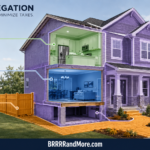
A cost segregation analysis separates qualifying property from the longer-lived building and assigns appropriate recovery periods to individual components.
The study doesn’t create new expenses or deductions.
It changes the timing of depreciation on costs you already incurred.
Suppose your completed rental has $250,000 of depreciable basis after excluding land. A properly prepared analysis identifies $45,000 of property that belongs in qualifying shorter-life categories.
Under current bonus depreciation rules, eligible portions of that $45,000 may potentially receive a 100% first-year deduction instead of being depreciated gradually over several years.
Meanwhile, the remaining building basis continues on its applicable 27.5-year schedule.
That separation is what makes cost segregation and bonus depreciation work together.
Repairs and Bonus Depreciation Aren’t the Same Thing
Not every rehab cost needs to qualify for bonus depreciation to produce a current deduction.
Some expenses may already qualify as deductible repairs or maintenance under the applicable tax rules. Capital improvements, on the other hand, generally become part of the property’s basis and receive depreciation treatment according to the type of asset involved.
Consider the difference between repairing a small section of damaged flooring and installing new flooring throughout a property during a major renovation.
The tax analysis can differ because the nature and scope of the work differ.
For BRRRR investors, dumping every project expense into a generic “repairs” account makes this much harder to sort out later.
Your bookkeeping should describe what you actually purchased or improved.
When Does Depreciation Start?
The purchase date isn’t necessarily the date that starts depreciation on a BRRRR rental.
Imagine buying a vacant property in February and renovating it through June. You finish the work, advertise the house in July, and sign a tenant in August.
Depreciation generally begins when the property is ready and available for its intended use—not simply when you acquired the distressed house.
The IRS explains the placed-in-service rules in Publication 946, along with the current eligibility requirements for the special depreciation allowance.
Keep documentation showing when the property became ready to rent. Listing records, inspection documents, certificates of occupancy when required, contractor completion records, and leasing correspondence can all help establish the timeline.
For a BRRRR project that crosses from one tax year into another, this date can become particularly important.
Used Property Can Qualify Too
Most BRRRR investors buy existing houses, duplexes, and small multifamily properties rather than new construction.
Fortunately, qualifying bonus depreciation isn’t restricted entirely to brand-new property.
Certain used depreciable property can qualify when it meets the acquisition and other eligibility requirements. Current IRS guidance specifically recognizes qualifying used property.
That doesn’t mean the existing residential building suddenly qualifies for a 100% deduction.
The 27.5-year building remains the 27.5-year building.
Instead, qualifying shorter-life assets acquired with the property or added during the rehab may be eligible.
For investors buying older distressed properties, that’s an important distinction.
What a First-Year Deduction Might Look Like
Consider a simplified BRRRR example.
You purchase a rental and complete an extensive renovation. After accounting for the land allocation and other basis considerations, assume you have $220,000 of depreciable property.
Further analysis identifies $35,000 of qualifying shorter-life assets.
If those assets meet the bonus depreciation requirements, current federal rules may allow you to deduct the qualifying $35,000 in the first year rather than spreading those deductions across the normal recovery periods.
The remaining building basis continues to depreciate separately.
You’re not receiving an additional $35,000 deduction that wouldn’t otherwise exist.
You’re receiving the deduction sooner.
That timing can have real value because money you don’t send out in taxes today remains available for another acquisition, reserves, debt reduction, or other portfolio needs.
The Deduction May Not Reduce Your Taxes Today
This is where discussions of bonus depreciation for rental property investors often leave out an important detail.
Creating a large depreciation deduction doesn’t automatically mean you can use the resulting rental loss against every other type of income.
Rental real estate generally falls under the passive activity rules. When passive losses exceed passive income, the excess may be suspended and carried forward rather than deducted against wages or other nonpassive income.
The IRS summarizes those limitations in its passive activity rules.
Your result can depend on factors such as other passive income, active participation, income levels, material participation, and real estate professional status.
Suppose bonus depreciation creates another $40,000 of rental deductions but the passive activity rules prevent you from currently using most of the resulting loss.
The deduction still exists, but the immediate cash-flow benefit isn’t what you expected.
That’s why the biggest available depreciation deduction isn’t automatically the most valuable number on your return.
When Bonus Depreciation Deserves More Attention
The strategy becomes more compelling when several pieces line up.
A substantial BRRRR renovation can create enough shorter-life property to make the acceleration meaningful. Larger properties and more extensive projects may provide greater opportunities than a small cosmetic rehab.
Your expected holding period matters as well. Accelerating deductions gives you more depreciation today and less from those particular assets later.
The ability to use the deduction may be even more important. If passive losses will simply accumulate, the benefit may arrive later than you expect.
Finally, compare the likely tax benefit with the cost of identifying and documenting the qualifying property. Paying for an extensive cost segregation study to accelerate a very small amount of depreciation may not make economic sense.
Keep Better Records During the Rehab
You can make this analysis easier before tax season ever arrives.
For each BRRRR project, retain:
- Purchase and closing documents
- Land-value allocation
- Detailed contractor invoices
- Appliance and equipment receipts
- Records of exterior and site improvements
- Capital-improvement documentation
- Rehab completion information
- Placed-in-service records
- Existing depreciation schedules
Good records help you distinguish the building from the assets inside and around it.
They also make it easier to determine whether professional cost segregation work could uncover enough qualifying property to justify the expense.
Use Bonus Depreciation to Improve an Already Good Deal
Bonus depreciation for rental property investors is especially relevant to BRRRR because the strategy often involves substantial improvements before the property enters its long-term rental phase.
Those improvements can create shorter-life assets that qualify for much faster depreciation under today’s 100% rules.
But don’t let the tax deduction become the reason you buy the property.
Your BRRRR still needs a strong purchase price, realistic rehab budget, supportable ARV, sufficient rent, manageable operating expenses, and a refinance that leaves the property financially healthy.
Once those fundamentals work, bonus depreciation can improve the timing of your tax deductions and potentially leave more capital available during the early years of ownership.
The useful question isn’t whether you can write off your whole rehab.
It’s which parts legitimately qualify—and whether accelerating those deductions improves the economics of the rental you already want to own.